Best AI for research in 2026, ranked by the task in front of you
Compares five real research tools at their current model versions, with strengths and limitations for research use.
What this comparison is actually about
Research is the worst possible use case for a single confident AI answer. Literature reviews, methodology critiques, and evidence synthesis all turn on the parts a model is unsure about, and a lone model hides exactly that. So the right question is not "which AI is smartest," it is "which tool fits which part of the research workflow," plus how to keep any of them honest.
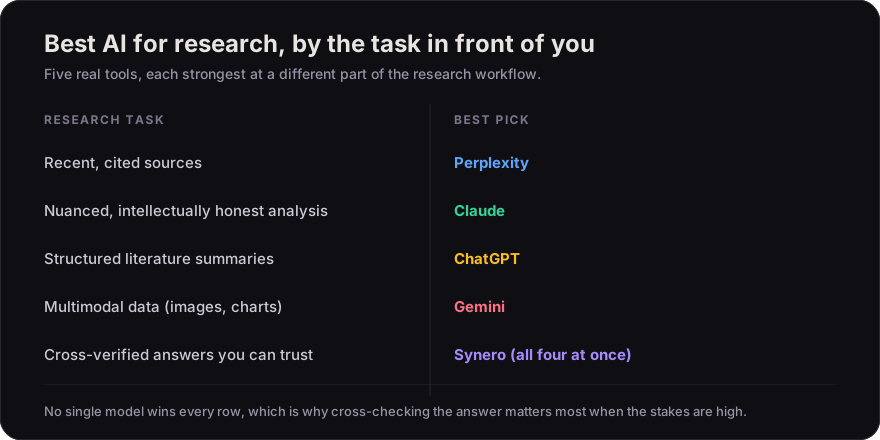
This compares the five tools researchers actually reach for, with current model versions, ranked by how well each handles real research work. No single tool wins every row, and the table at the end is the part to use.
The tools, ranked for research
1. Claude (Opus 4.7, Sonnet 4.6)
The strongest single model for the analytical core of research. Claude is best at nuanced reasoning across complex or conflicting evidence, and it is more willing than most to flag its own uncertainty instead of papering over it. For a literature synthesis where intellectual honesty matters, this is the default. Limitation: it can over-hedge, and it is still one model with one set of blind spots. Best for: nuanced analysis where being honest about uncertainty is the whole point.
2. Perplexity
The right tool for the sourcing stage. Every answer is grounded in real-time web results with citations, so it is the fastest way to find recent publications and check a claim against a source you can open. Its Model Council feature runs a few models and merges them. Limitation: it is optimized for search and retrieval, not deep multi-step analysis, and the multi-model feature is a bolt-on rather than the core design. Best for: finding recent, citable sources quickly.
3. ChatGPT (GPT-5.x)
The workhorse for structure. Strong step-by-step reasoning and excellent at organizing a messy pile of notes into a clean outline or summary. If you need a literature review scaffolded fast, it is reliable. Limitation: prone to confident hallucinations on specific citations, with no built-in cross-check, so anything it asserts about a source needs verifying. Best for: structured literature summaries and research outlines.
4. Gemini (3.1 Pro, 3 Flash)
The pick when your research is multimodal. It handles images, charts, and mixed data well, and draws on Google's knowledge breadth for cross-domain connections. Limitation: depth can be inconsistent on specialized topics, and like the others it is a single model with a single set of biases. Best for: research involving images, figures, and mixed data formats.
5. Synero
Not a single model, but the answer to the problem the other four share. Synero sends your question to four of these models at once, each in a distinct advisor role, then synthesizes one answer that shows where they agree (higher confidence) and where they disagree (the claim to go verify). The cross-check is the core architecture, not a feature. Limitation: slower and pricier per query than a single model, and overkill for quick lookups. Best for: high-stakes research questions where a confidently wrong answer is expensive.
At a glance
| Tool | Strongest at | Watch out for | Best for |
|---|---|---|---|
| Claude | Nuanced, honest analysis | Over-hedging; single perspective | Synthesis where uncertainty matters |
| Perplexity | Cited, recent sources | Search over deep analysis | Finding and checking sources |
| ChatGPT | Structure and organization | Confident citation errors | Summaries and outlines |
| Gemini | Multimodal data | Uneven depth | Images, charts, mixed data |
| Synero | Cross-verified answers | Slower, pricier per query | High-stakes questions |
How to actually choose
Use Perplexity to gather sources, Claude or ChatGPT to analyze and structure, Gemini when the inputs are visual. Then, for the conclusions you are going to publish or act on, run the question past more than one model so a confident error from any single one gets caught. That last step is what Synero automates: one question, four independent reads, one synthesized answer that surfaces the disagreement instead of hiding it.
Notes
Model versions reflect the current generation as of 2026 and will change as these tools update. Every tool named here is a real, available product; the strengths and limitations describe general research use, not a benchmark score.
Related
Put your question to the Council
Four frontier models answer independently, then Synero synthesizes one answer that shows where they agree and where they split.
Get Started